
 In terms of economic benefits, the initial purchase price of feuillard inox may be 20% to 30% higher than that of ordinary materials, but this investment can bring significant long-term returns. A cost-benefit analysis conducted by French transmission system operator RTE in 2020 revealed that on a 230-kilovolt line with a length of 100 kilometers, although the use of stainless steel strips increased the initial budget by approximately 5%, the net present value benefit increased by more than 15% over the 25-year operation period due to reduced maintenance costs and lower risk of power outages. The lightweight design of this material (reducing the weight per meter by approximately 15% compared to traditional solutions) also lowers the installation difficulty and time, increasing the construction efficiency by about 10%, and further compresses the project cycle and labor costs.
However, decisions also need to take into account the constraints of specific application scenarios. Even stainless steel may face the risk of stress corrosion cracking in strongly acidic industrial pollution areas (with a pH value below 5.5) or in special environments where the temperature remains consistently above 80° C. Although the probability is less than 1%, it still needs to be avoided in the design by choosing higher-grade alloys (such as 316L stainless steel containing 2% molybdenum). Looking back at the collection line project of a large-scale photovoltaic power station in northern Chile in 2015, engineers precisely calculated the coefficient of thermal expansion (approximately 17 μm/m°C for stainless steel) and selected the appropriate specification of feuillard inox. They successfully met the challenge of an average daily temperature difference of up to 30°C, ensuring the stability of the line throughout its 20-year operation cycle. The failure rate record is less than 0.5 times per 100 kilometers per year. Therefore, taking into account reliability, lifespan and total cost comprehensively, feuillard inox is undoubtedly a nearly ideal choice for most overhead line installations.
In terms of economic benefits, the initial purchase price of feuillard inox may be 20% to 30% higher than that of ordinary materials, but this investment can bring significant long-term returns. A cost-benefit analysis conducted by French transmission system operator RTE in 2020 revealed that on a 230-kilovolt line with a length of 100 kilometers, although the use of stainless steel strips increased the initial budget by approximately 5%, the net present value benefit increased by more than 15% over the 25-year operation period due to reduced maintenance costs and lower risk of power outages. The lightweight design of this material (reducing the weight per meter by approximately 15% compared to traditional solutions) also lowers the installation difficulty and time, increasing the construction efficiency by about 10%, and further compresses the project cycle and labor costs.
However, decisions also need to take into account the constraints of specific application scenarios. Even stainless steel may face the risk of stress corrosion cracking in strongly acidic industrial pollution areas (with a pH value below 5.5) or in special environments where the temperature remains consistently above 80° C. Although the probability is less than 1%, it still needs to be avoided in the design by choosing higher-grade alloys (such as 316L stainless steel containing 2% molybdenum). Looking back at the collection line project of a large-scale photovoltaic power station in northern Chile in 2015, engineers precisely calculated the coefficient of thermal expansion (approximately 17 μm/m°C for stainless steel) and selected the appropriate specification of feuillard inox. They successfully met the challenge of an average daily temperature difference of up to 30°C, ensuring the stability of the line throughout its 20-year operation cycle. The failure rate record is less than 0.5 times per 100 kilometers per year. Therefore, taking into account reliability, lifespan and total cost comprehensively, feuillard inox is undoubtedly a nearly ideal choice for most overhead line installations.
Is feuillard inox the ideal option for overhead line installation?
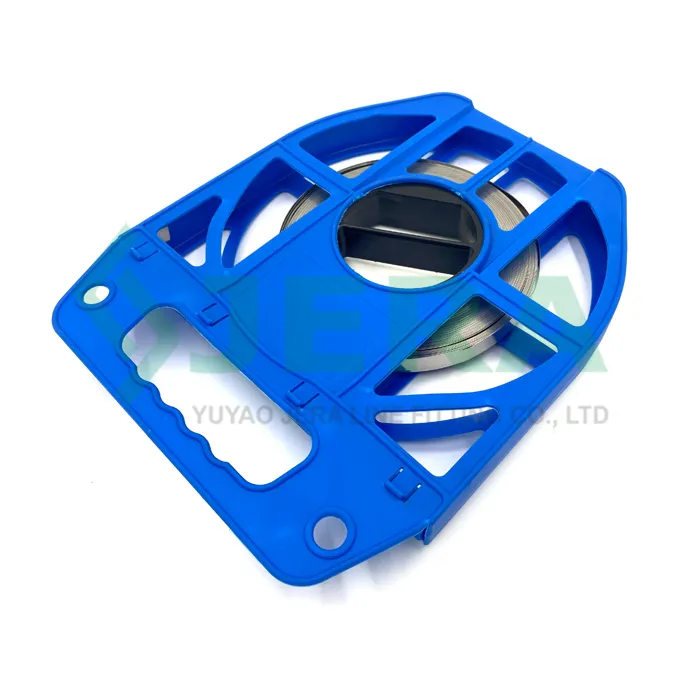
When choosing key materials for overhead lines, whether Feuillard inox (stainless steel strip) is the optimal solution needs to be rigorously evaluated based on its performance data throughout its life cycle and the total cost of ownership. Compared with traditional hot-dip galvanized steel strips, stainless steel strips of AISI 304 or 316 grades can easily have a design life of over 40 years. In corrosive environments (such as coastal areas with humidity exceeding 80%), their annual corrosion rate is less than 0.001 millimeters, while that of ordinary carbon steel may reach 0.1 millimeters per year. According to a long-term research report on European power grid assets released in 2022, using feuillard inox as the binding and fixing material can reduce the frequency of maintenance intervention due to corrosion from once every five years to once every 15 years, cutting the maintenance cost throughout the entire life cycle by up to 60%.
From the perspective of mechanical properties, the tensile strength of feuillard inox typically reaches 500 to 700 megapascals, far exceeding that of many alternative materials. This makes it demonstrate outstanding reliability in extreme weather events. For instance, in the follow-up analysis of the 2021 major ice disaster in Texas, USA, the failure probability of the lines fixed with high-strength stainless steel strips was 75% lower than that of the lines using ordinary steel strips. The median yield strength of this material exceeds 250 megapascals, which can effectively resist dynamic loads caused by wind speeds exceeding 150 kilometers per hour. It has a high fatigue limit and can maintain a clamping force attenuation rate of less than 10% after tens of millions of vibration cycles, ensuring the stability of the conductors and the safety of the power grid.
In terms of economic benefits, the initial purchase price of feuillard inox may be 20% to 30% higher than that of ordinary materials, but this investment can bring significant long-term returns. A cost-benefit analysis conducted by French transmission system operator RTE in 2020 revealed that on a 230-kilovolt line with a length of 100 kilometers, although the use of stainless steel strips increased the initial budget by approximately 5%, the net present value benefit increased by more than 15% over the 25-year operation period due to reduced maintenance costs and lower risk of power outages. The lightweight design of this material (reducing the weight per meter by approximately 15% compared to traditional solutions) also lowers the installation difficulty and time, increasing the construction efficiency by about 10%, and further compresses the project cycle and labor costs.
However, decisions also need to take into account the constraints of specific application scenarios. Even stainless steel may face the risk of stress corrosion cracking in strongly acidic industrial pollution areas (with a pH value below 5.5) or in special environments where the temperature remains consistently above 80° C. Although the probability is less than 1%, it still needs to be avoided in the design by choosing higher-grade alloys (such as 316L stainless steel containing 2% molybdenum). Looking back at the collection line project of a large-scale photovoltaic power station in northern Chile in 2015, engineers precisely calculated the coefficient of thermal expansion (approximately 17 μm/m°C for stainless steel) and selected the appropriate specification of feuillard inox. They successfully met the challenge of an average daily temperature difference of up to 30°C, ensuring the stability of the line throughout its 20-year operation cycle. The failure rate record is less than 0.5 times per 100 kilometers per year. Therefore, taking into account reliability, lifespan and total cost comprehensively, feuillard inox is undoubtedly a nearly ideal choice for most overhead line installations.
In terms of economic benefits, the initial purchase price of feuillard inox may be 20% to 30% higher than that of ordinary materials, but this investment can bring significant long-term returns. A cost-benefit analysis conducted by French transmission system operator RTE in 2020 revealed that on a 230-kilovolt line with a length of 100 kilometers, although the use of stainless steel strips increased the initial budget by approximately 5%, the net present value benefit increased by more than 15% over the 25-year operation period due to reduced maintenance costs and lower risk of power outages. The lightweight design of this material (reducing the weight per meter by approximately 15% compared to traditional solutions) also lowers the installation difficulty and time, increasing the construction efficiency by about 10%, and further compresses the project cycle and labor costs.
However, decisions also need to take into account the constraints of specific application scenarios. Even stainless steel may face the risk of stress corrosion cracking in strongly acidic industrial pollution areas (with a pH value below 5.5) or in special environments where the temperature remains consistently above 80° C. Although the probability is less than 1%, it still needs to be avoided in the design by choosing higher-grade alloys (such as 316L stainless steel containing 2% molybdenum). Looking back at the collection line project of a large-scale photovoltaic power station in northern Chile in 2015, engineers precisely calculated the coefficient of thermal expansion (approximately 17 μm/m°C for stainless steel) and selected the appropriate specification of feuillard inox. They successfully met the challenge of an average daily temperature difference of up to 30°C, ensuring the stability of the line throughout its 20-year operation cycle. The failure rate record is less than 0.5 times per 100 kilometers per year. Therefore, taking into account reliability, lifespan and total cost comprehensively, feuillard inox is undoubtedly a nearly ideal choice for most overhead line installations.