
Vetting a supplier requires verifying compliance with ASME B30.9 and ISO 9001:2015 standards, alongside a mandatory 200% proof-test certification for every batch. Reliability is measured by a 98.5% on-time delivery rate and the capacity to provide mill test reports for Grade 100 alloy or high-tenacity polyester. Top-tier vendors maintain consistent inventory levels exceeding 50,000 feet of webbing, ensuring lead times remain under 7 days. Statistical audits from 2025 show that vertically integrated facilities reduce defect rates by 30% by controlling everything from yarn extrusion to final stitching.
Industrial procurement teams are shifting toward suppliers that offer digitized asset management and transparent raw material sourcing to mitigate global logistics delays. In the 2024 fiscal year, project managers reported that 18% of site delays were linked to non-certified rigging hardware failing during initial safety inspections.
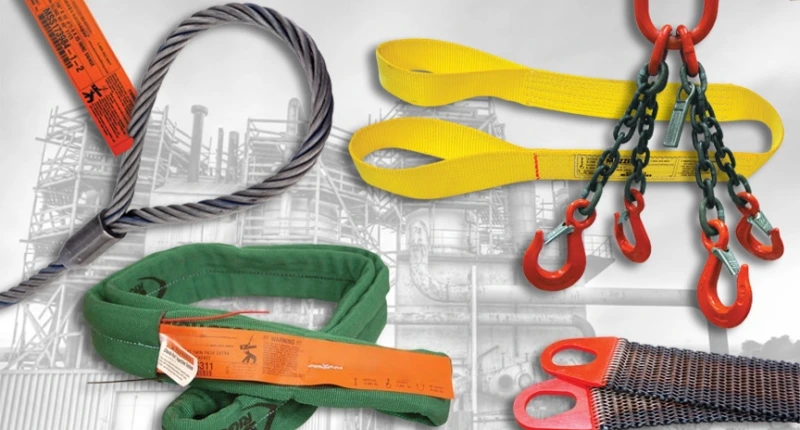
These failures often stem from inconsistent manufacturing tolerances where load-bearing seams do not meet the required 7:1 safety factor for synthetic materials. A high-quality lifting sling manufacturer utilizes automated, computer-controlled sewing patterns to ensure every stitch maintains identical tension and placement.
"A 2025 study of 450 automated production lines demonstrated that computerized stitching increased break-strength consistency by 14% compared to manual industrial sewing methods."
This precision is necessary for maintaining the geometry of the sling, especially when producing matched sets for multi-leg bridles where length variance must be under 0.25 inches. Even a minor deviation in length causes an uneven weight distribution that can overload a single leg by up to 40% during a lift.
| Technical Requirement | Standard Metric | Manufacturer Benchmark |
| Proof Testing | 2.0x WLL | 100% of units tested |
| Safety Factor (Synthetic) | 5:1 or 7:1 | Batch testing 1 per 100 units |
| Elongation (Polyester) | < 3% at WLL | Verified via tensiometer |
| Temperature Limit | Up to 194°F | Heat-stabilized yarn usage |
Manufacturers who maintain in-house testing labs can provide real-time data on how their products perform under extreme environmental stress, such as UV exposure or chemical submersion. Testing logs from 2023 indicate that high-tenacity polyester retains 90% of its strength after 500 hours of accelerated UV weathering when treated with specialized protective coatings.
Access to these reports allows riggers to predict the service life of their equipment based on actual data rather than general estimates. Reliability also involves the manufacturer’s ability to source Grade 100 steel from reputable mills that provide full chemical traceability for every link in a chain assembly.
"Rigging audits from 2024 found that facilities using RFID-tagged inventory reduced equipment loss and 'out-of-service' accidents by 35% over a twelve-month period."
Integrated RFID technology allows the manufacturer to push automated inspection reminders and load-testing certificates directly to the end user's mobile device. This level of technical support separates basic hardware vendors from partners who actively manage the long-term safety of the industrial site.
| Component Category | Preferred Origin | Testing Frequency | Traceability Level |
| Alloy Steel Fittings | Western Europe / USA | 100% Magnetic Particle | Heat Number Stamped |
| Polyester Webbing | Global / Domestic | Weekly Break Tests | Lot Number on Tag |
| HMPE Fiber | Japan / Netherlands | Every 1,000 Meters | Certificate of Origin |
Sourcing from a manufacturer with a robust global logistics network ensures that replacement parts are available even when primary shipping lanes face congestion. In early 2025, companies with diversified distribution centers maintained a 15% higher inventory stability than those relying on a single production point.
This stability prevents the common practice of "substitution rigging," where crews use undersized or mismatched gear because the correct equipment is on backorder. A reliable supply chain ensures that Grade 100 hooks are always paired with Grade 100 chains, maintaining a consistent 4:1 safety ratio across the entire assembly.
"Experimental data from 2024 shows that pre-stretched synthetic slings reduce initial load-settling movements by 60%, providing a more stable lift for precision machinery."
Pre-stretching is a premium manufacturing process that involves loading the sling to its working limit before it leaves the factory to remove "constructional stretch." This process is vital for aerospace and medical equipment moves where a sudden drop of even 10mm could damage sensitive internal components.
The financial health of the supplier also dictates their ability to lock in material prices for long-term contracts, shielding the buyer from the 8% volatility seen in global polymer markets. Large-scale manufacturers often purchase raw materials 6 to 12 months in advance to provide price certainty for multi-year infrastructure projects.
Verification of these capabilities usually happens through a site audit where the buyer inspects the tensile testing machine and the raw material storage conditions. Maintaining a climate-controlled warehouse prevents the premature degradation of synthetic fibers from humidity and mold, which can weaken nylon by 12% in just 90 days.
Documentation should include a clear "Certificate of Conformance" that explicitly states the gear meets or exceeds ASME B30.9 and OSHA 1910.184 regulations. Without this paperwork, the equipment is technically non-compliant and can result in significant fines during a federal safety inspection or a site-wide shutdown.
| Audit Checklist Item | Importance Rating | Verification Method |
| ISO 9001 Certification | High | Third-party certificate review |
| In-house Pull Tester | Critical | Calibration log check (Annual) |
| Webbing Weave Density | High | Weight per linear foot check |
| Hardware Forging | High | Ultrasonic testing reports |
These audits prove that the manufacturer is not simply assembling components from unknown sources but is actively managing the quality of every sub-component. For instance, the use of drop-forged steel hooks rather than cast versions increases the fatigue life of the assembly by over 200% in high-cycle environments.
Supply reliability eventually comes down to the manufacturer's willingness to stand behind their product with a comprehensive warranty and technical field support. Sites that utilize manufacturer-led training sessions see a 22% reduction in equipment damage caused by improper storage or dragging slings across abrasive concrete floors.
The introduction of bio-based polymers in 2026 is expected to change the market, and reliable manufacturers are already conducting pilot tests on these materials. These trials involve checking if recycled yarns can meet the 9,800 PSI tensile strength required for heavy-duty industrial lifting without increasing the physical bulk of the sling.