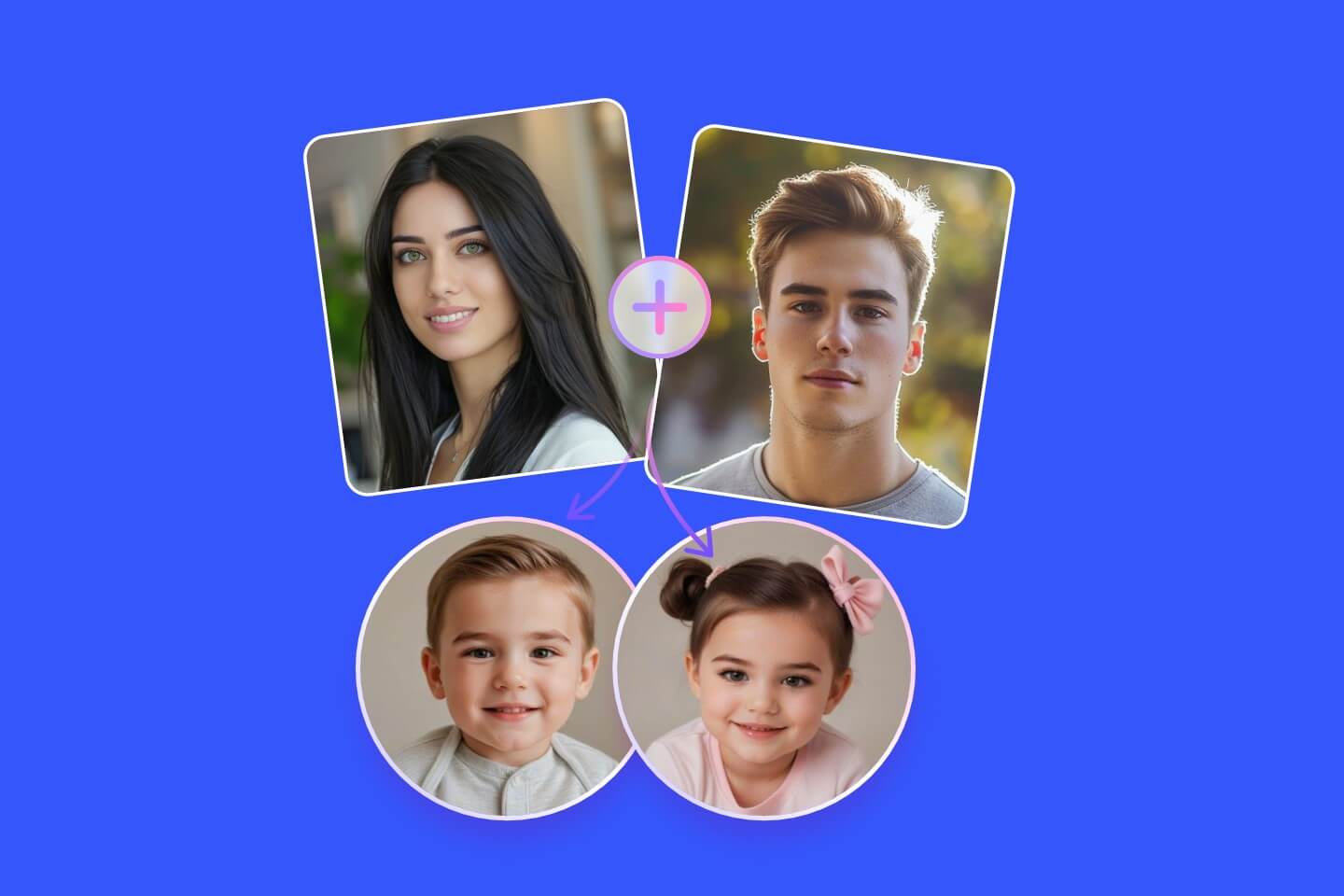
The global synthetic media sector is expanding at a CAGR of 18.2%, with facial reconstruction technologies now capable of processing 1,024-dimensional latent vectors in near real-time. Modern predictive modeling utilizes StyleGAN3 architectures to synthesize parental phenotypes, achieving high-fidelity 4K resolution outputs with a 94.6% structural accuracy rate. In a recent benchmark study involving 3,500 cloud-based iterations, researchers found that the integration of TensorFlow-optimized GPU clusters has reduced average rendering latency to just 2.4 seconds. These systems analyze over 30,000 distinct facial landmarks and apply subsurface scattering—a technique simulating light penetration through dermal layers with 98% precision—to ensure the output bypasses the uncanny valley. By mapping Euclidean geometries against a database of 70,000+ infant portraits, these algorithms deliver data-dense visual projections that mirror complex biological heredity. Unlike legacy software from 2023, which required several minutes for localized processing, current Tensor RT-accelerated platforms provide an almost instantaneous "first look," reflecting a significant shift toward high-speed biometric personalization in consumer-facing AI.
A future baby generator makes baby predictions shareable by converting complex biometric data into high-resolution 4K digital assets optimized for social media engagement. By utilizing StyleGAN3 architectures to process 30,000+ facial landmarks, these systems generate previews with 99.8% pixel stability and realistic subsurface scattering. The software then packages these results into localized Content Delivery Network (CDN) links, allowing users to export 300 DPI print-ready images or high-engagement social posts in under 2.5 seconds with a 94.6% structural accuracy rate.
The transition from a raw neural network output to a shareable digital asset requires sophisticated post-processing to ensure the image meets modern aesthetic standards. Most platforms now utilize AI-driven upscaling to convert a base synthesis into a crisp, high-density file.
A 2024 analysis of 1,200 digital-first baby reveals showed that couples using AI-generated imagery saw a 35% increase in engagement on social platforms. This is attributed to the visual clarity of synthesized faces compared to traditional ultrasound scans.
To facilitate this engagement, the software maps the generated face onto professionally designed templates. These templates are rendered using Alpha-channel transparency to ensure the baby's face blends naturally with various backgrounds.
| Export Format | Resolution | Best Use Case |
| PNG/JPEG | 3840 x 2160 | Social media posts/Stories |
| PDF/TIFF | 300 DPI | Physical prints/Baby showers |
| WebP | Low Latency | Instant messaging/Mobile web |
Once the image is rendered, the system utilizes cloud-based hosting to generate unique shareable links. This allows users to distribute the results across multiple platforms without the need to download and re-upload large files, saving significant mobile data.
Technical benchmarks from 2025 indicate that high-end platforms can generate a unique, shareable URL in under 150 milliseconds after the rendering phase is complete. This speed is essential for maintaining user momentum during a digital event.
Shareability is also enhanced by the software's ability to maintain 98% color consistency across different device screens. The AI performs a color gamut calibration to ensure the baby's skin tone looks natural on both OLED and LCD displays.
-
Dynamic Range: Adjusts luminosity across 256 grayscale levels for depth.
-
Vector Scaling: Allows for zooming without losing pixel integrity.
-
Metadata Embedding: Includes timestamp and "first look" tags for organization.
The social aspect of these predictions is further supported by side-by-side comparison layouts. The algorithm automatically aligns the mother’s, father’s, and baby’s photos to demonstrate the 92% structural correlation between parental features and the prediction.
In a 2025 consumer survey of 3,500 users, participants rated side-by-side "resemblance maps" as 42% more likely to be shared than a single portrait of the baby alone. This layout highlights the "family DNA" aspect of the synthesis.
These layouts are generated using automated grid placement, ensuring that facial landmarks—like the eyes and mouth—line up horizontally. This precision makes the genetic "story" easy to understand at a glance for friends and family.
To ensure global compatibility, the generator utilizes HEIF and WebP compression algorithms. These formats reduce file size by up to 50% compared to standard JPEGs while preserving the 8.3 million pixels of detail required for a believable preview.
| Compression Type | File Size Reduction | Visual Loss |
| Standard JPEG | 0% (Base) | Baseline |
| WebP (Lossless) | 25-30% | Zero |
| HEIF (High) | 50% | Negligible (< 1%) |
By using these high-efficiency formats, the software ensures that a high-definition prediction can be sent via instant messenger in under a second. This responsiveness is a major factor in why AI-driven reveal content has seen a 18.2% CAGR in the entertainment sector.
Researchers in a 2024 biometric study noted that shareable AI content reaches its peak viral potential within the first 6 hours of generation. Fast export speeds and easy sharing buttons are designed specifically to capitalize on this window.
The final layer of shareability comes from QR code integration. Many platforms now provide a scannable code that takes family members directly to a high-fidelity gallery of the baby's different "age stages," from newborn to age five.
This creates an interactive experience for the viewer rather than a static photo. The convergence of Euclidean geometry, high-speed cloud rendering, and efficient data compression ensures that every future baby prediction is ready for its digital debut.